
Have a February Birthday? Check out this read from Thursd.! on this months birth flowers!
February is often linked with affection, reflection, and close connections. Fittingly, its traditional flowers are the Violet and the Iris, two flowers with a long-standing cultural presence and delicate beauty that work well for gifting and design.
Violets (Viola) are known for compact growth and small, five-petaled flowers with a delicate appearance, often seen in purple tones as well as lighter shades. Irises (Iris) stand out for their structured form, upright leaves, and layered silhouette that gives each flower strong visual definition. Together, they form a February pairing that feels personal and symbolic without exaggeration.
February Birth Flower Duo – Violet and Iris
The violet is widely linked with modesty, loyalty, and quiet devotion. It is a classic birth flower choice that communicates sincerity rather than spectacle, which is why it appears so often in traditional gifting and sentimental stories. The Iris is often associated with faith, wisdom, and messages of hope. Its name comes from Greek mythology, where Iris is the messenger of the gods and the personification of the rainbow, which helps explain why the flowers are linked with communication. In arrangements, Iris can also add a light, fresh note that contrasts nicely with a violet's sweet fragrance and softer form, making these birth month flowers practical as well as symbolic.
As a pair, Violet and Iris work well because they balance softness with structure. This is one reason they remain a February birth flower duo for many people, and why they are often treated as some of the first flowers that emotionally signal spring is returning.
Historical and Cultural Significance of February Birth Flowers
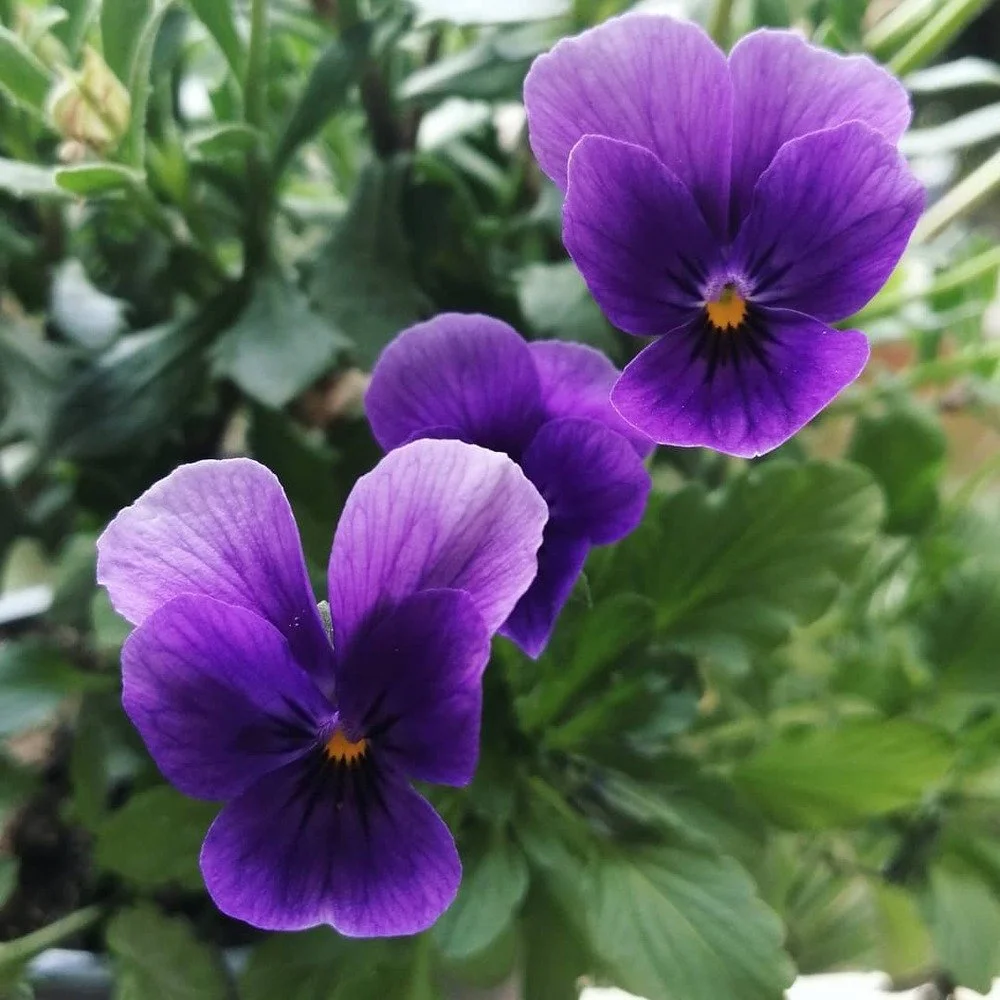
Violets appear in classical references and later European traditions. In Ancient Greece, violets were linked with themes of love and devotion, and in ancient times, writers continued to connect the flower with affectionate symbolism. In the Middle Ages, some Christian symbolism and devotional art traditions associated violets with humility and, in certain contexts, with the Virgin Mary. Later, the Victorian era popularized floriography (the "language of flowers"), where violets were commonly used to express faithfulness and quiet commitment. Today, violets remain popular in gardens and seasonal arrangements. Their appeal is practical as well as symbolic: wide varieties are hardy, easy to grow, and well-suited to borders and containers.

The Iris draws much of its story from Greek mythology through its name. Because Iris is the rainbow messenger, the flower is frequently interpreted as a symbol of communication, guidance, and hopeful news. Across European art and symbolism, the Iris also appears as a motif connected with royalty, emblems, and formal design. Some theories even link stylized floral emblems like the Fleur-de-lis to Iris forms, though this is debated and best treated as an interpretation. In contemporary gardening, Irises are valued for their range of colors, strong vertical lines, and seasonal impact. Their ornamental value is one reason these flowers remain widely used in borders and landscape planting, and they have influenced fragrance culture through orris root.